Slab Leak Detection in California
A slab leak is a break in a water line that runs under the concrete foundation of a home.
It's the leak California homeowners dread most, mostly because of what they picture: jackhammers, trenches through the living room, a week of dust. That picture belongs to the era of guessing. Modern slab leak detection exists to replace the guess with a mark — a single point on the floor, confirmed by two different tests, where the pipe below is actually broken. This page explains why slab lines fail in California homes, how the pinpointing works through concrete, and what your real repair options are once the spot is known.
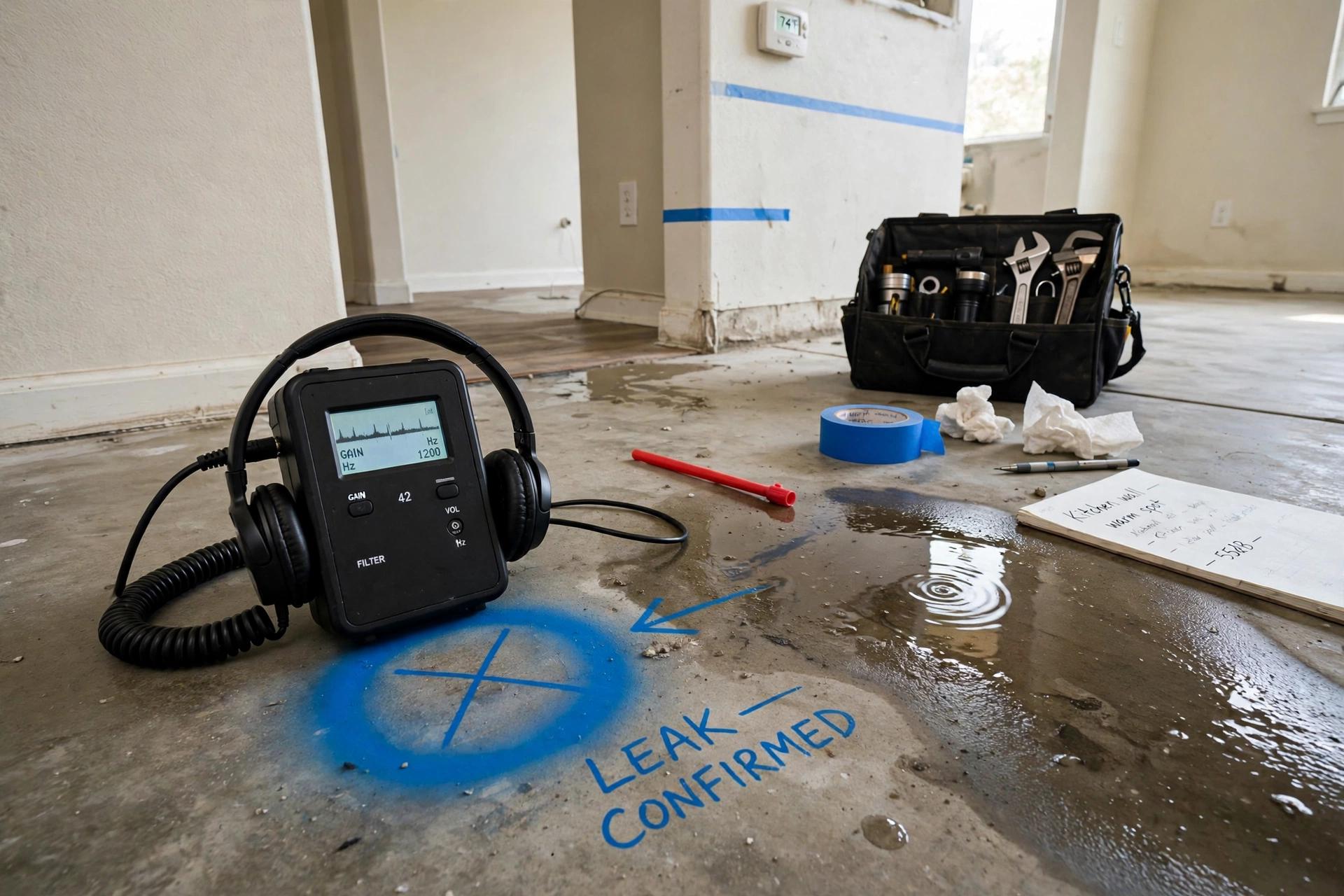
How is a slab leak detected?
A slab leak is detected by first confirming the loss with a meter test, then mapping the warm-water spread with thermal imaging and pinpointing the break with acoustic listening equipment through the concrete. The confirmed spot is marked on the floor. Accurate detection usually takes one to three hours and breaks nothing.
Two methods agreeing is the standard to insist on. Thermal imaging alone shows where warm water spreads, which can be a foot or more from the break. Sound alone can reflect oddly in a slab. When the heat map and the loudest acoustic point land on the same spot, that's the mark worth cutting on.
Why do slab lines fail in California?
Three forces do most of the damage. The first is chemistry: hard, mineral-heavy water corrodes copper from the inside, and pinhole leaks are the end stage of that corrosion. The second is movement. Expansive soils across much of the state swell when wet and shrink when dry, and that slow cycle bends rigid pipe at the same stress points year after year. The third is simple age — a large share of California's slab homes were built between the 1950s and the 1980s, and their original copper is at or past its expected life.
Hot lines usually fail first. Heat speeds corrosion and makes the pipe expand and contract daily, so the classic slab leak is on a hot-water run — which is also why a warm patch of floor is such a reliable early sign. Cold-line slab leaks happen too; they just announce themselves differently, through the meter and the bill rather than through your feet.
What does pinpointing through concrete actually involve?
The visit starts above ground. A pressure test on the hot and cold systems separately establishes which side is leaking and roughly how fast. Then the thermal camera maps the floor: a hot-line leak draws a plume, and its shape hints at the direction the water runs under the slab. With the search area down to a few square feet, acoustic gear takes over. The technician listens in a grid, marking signal strength, until the loudest point is consistent from several positions.
Stubborn cases get a third pass. Tracer gas introduced into the isolated line escapes at the break and rises through the concrete, where a detector confirms the spot from above. Electronic pipe locators also trace the line's exact route, which matters in homes where the pipe doesn't run the way anyone would assume. The deliverable is a marked point, the line's route, and readings the repair crew can work from.
What are the repair options once it's found?
There are three honest options, and the right one depends on the pipe's overall condition. A spot repair opens the slab at the mark, cuts out the failed section and replaces it — the cheapest route, and the right one when the rest of the line tests sound. A reroute abandons the under-slab run and carries the line through walls or attic instead; it costs more today and ends the slab risk for that line permanently. A full repipe replaces the system, which is worth discussing when tests show the copper is failing in several places at once.
What detection gives you is the ability to choose with facts. A single pinhole in otherwise healthy copper is a spot repair. The third pinhole in two years is a pipe telling you something, and paying for a reroute beats paying for a third hole in your floor. Ask the detection technician directly what the line's condition looked and sounded like — that judgement is part of what you're paying for.
How the visit runs
Prove which side leaks
Hot and cold systems are pressure tested separately so half the house is ruled out at once.
Map the heat
Thermal imaging traces the warm plume under the slab and shrinks the search area.
Listen in a grid
Acoustic readings across the floor converge on the loudest, most consistent point.
Confirm and mark
A second method verifies the spot before it's marked for repair.
What affects the cost of slab leak detection?
- Which line is leaking — hot lines usually announce themselves faster than cold lines
- Slab thickness and floor coverings: tile, hardwood and carpet all change how sound and heat read
- Whether the pipe route is known or has to be traced electronically first
- The number of separate leaks — ageing copper can fail in more than one place
- Access for equipment and how much furniture has to move off the search area
Prices are set after the tests show what the job actually is. Anyone quoting a firm figure before testing is guessing.
Slab Leak Detection questions, answered
Is a slab leak an emergency?
It's urgent rather than dramatic. A slab leak won't flood the house in an hour, but every day it runs it undermines the slab's base, feeds mould and adds to the water bill. Shut-off is worth it if the meter shows a fast loss. Otherwise, book detection within days, not months, and keep the area dry on the surface.
Will the repair mean breaking up my whole floor?
Not with a proper pinpoint. A spot repair typically opens a hole of about one to two square feet at the marked location. The horror stories come from exploratory digging — cutting in several places looking for the leak. That's exactly what detection beforehand is designed to prevent, and why the mark should be confirmed by two methods.
Can a slab leak cause foundation damage?
Yes, over time. Water running under a slab washes out the compacted base material, and in expansive soils it creates uneven moisture that lifts one part of the slab while another settles. The cracks that appear in tile and drywall months later often trace back to a leak that was treated as just a plumbing problem. Early detection is foundation protection, not just water saving.
How can I tell a slab leak from a surface leak?
The meter test narrows it down: if the loss continues with the house's internal shut-offs closed in sequence, the leak is on a buried or under-slab section. Warm floors point under the slab; a soggy yard points to the main line. A detection visit separates these properly with isolation testing instead of leaving you to guess from symptoms.
Need slab leak detection?
Call and talk to our team in your city.