Emergency Leak Detection in California
An emergency leak doesn't need a research project.
It needs the water stopped, the damage contained, and then — quickly — someone who can say exactly where the failure is so the repair starts in the right place. This is the fast version of the same discipline: triage first, pinpoint second, with the order of operations built around limiting damage rather than producing a leisurely report. If you're reading this with water where it shouldn't be, the first section is the one that matters. The rest explains what a priority visit does and how to handle the hours after it.
What should I do first in a water leak emergency?
First, shut off the water at the main valve or the street meter and switch off power to any flooded area if it's safe to do so. Move belongings out of the water, then call for emergency leak detection. With the system controlled, a technician can pinpoint the failure and the repair can start in the right place.
Everything before the shut-off is damage; everything after it is a plan. A burst line at full pressure can release hundreds of gallons an hour, so minutes spent finding the valve are worth more than minutes spent mopping.
The first ten minutes: shut-off points that matter
Every California home has a main shut-off, usually where the service line enters the house or at a valve near the meter, and many have a second valve at the street meter itself. Turning the main stops everything; if you can't find it or it won't budge, the meter valve is the fallback — and the water utility's emergency line can close it too. If the leak is clearly from one fixture or appliance, its local valve is faster, but when in doubt, close the main.
Then protect what water damages fastest. Power off to flooded rooms if outlets or appliances are in standing water — from the breaker panel, not by wading in. Get documents, electronics and furniture feet off wet floors. Photograph everything before you move it if you can do so safely: those photos, taken in the first hour, are the ones an insurance claim is built on.
What a priority detection visit does differently
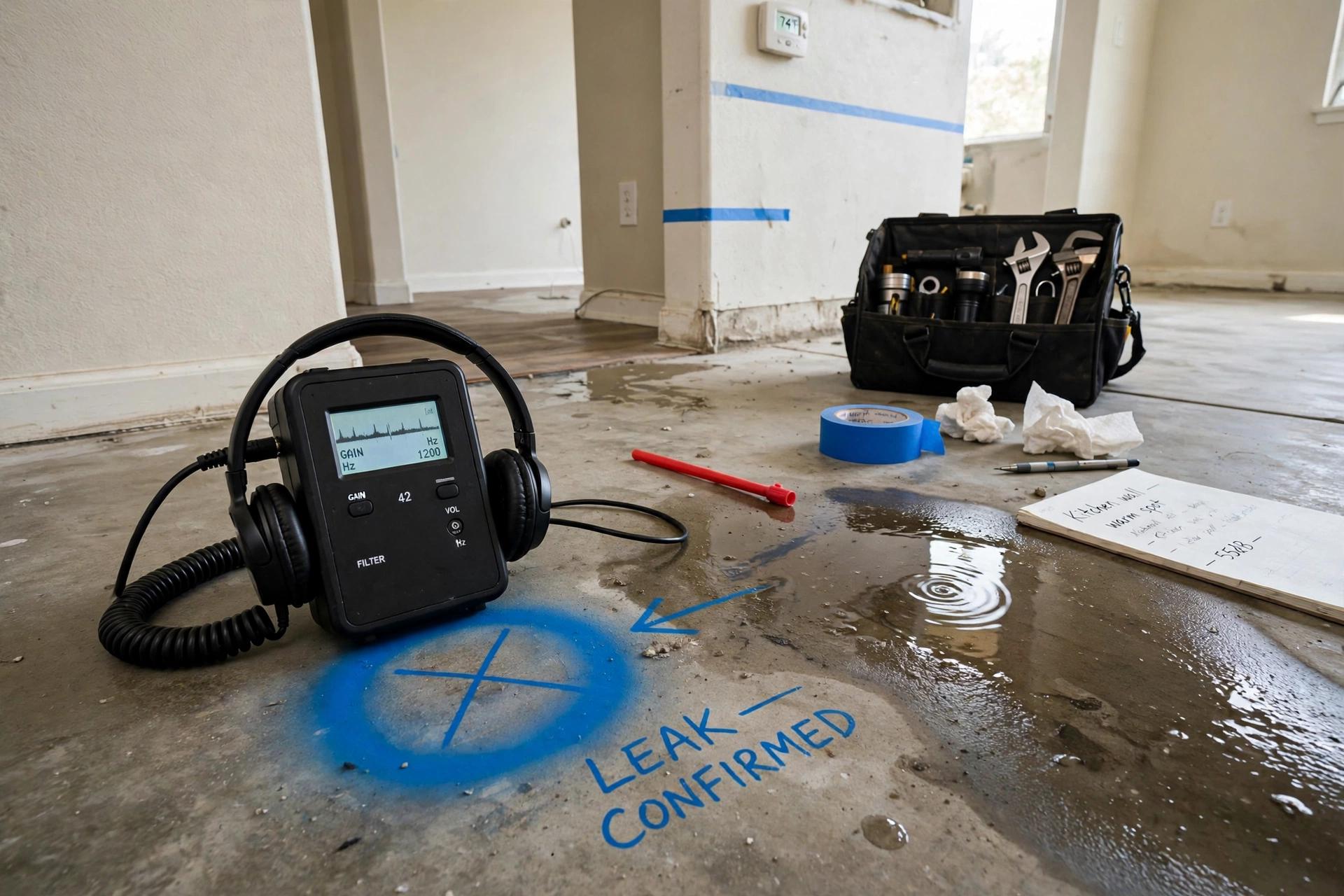
The goal order flips. On a routine visit the technician proves, isolates, then pinpoints. On an emergency call, the first job is confirming the system is controlled and finding any second failure — a pipe that burst from pressure or freezing sometimes has a sibling. Then pinpointing happens with the fastest reliable method for the situation, often acoustic work on a re-pressurised section, so the repair crew can start on a marked spot the same visit.
Speed doesn't mean skipping the evidence. The readings, the marked location and photos of the damage and the failure point still get documented, because the insurance conversation starts within days and memories fade faster than water dries. You'll also get the practical calls made for you: whether the line can be capped and the rest of the house re-pressurised, or whether the property stays off water until the repair lands.
After the water stops: drying, claims and the repair
Drying is a race against mould, which can establish in a day or two in a warm California wall cavity. Fans and open air help on surfaces; water inside walls and under slabs needs proper extraction and dehumidifying, which is its own trade. The detection report plus your first-hour photos plus the repair invoice form the core of most claims — keep all three together, and notify the insurer early, because many policies expect prompt notice of water damage.
Finally, the repair decision. An emergency tempts everyone toward the fastest patch, and sometimes that's right. But if the failed line is old copper that has let go under pressure, ask what the detection showed about the rest of the system before authorising a like-for-like fix in the same material. The cheapest emergency is the one that doesn't repeat next winter.
How the visit runs
Shut it off
Main valve or street meter first; power off to flooded areas from the panel if safe.
Call it in
Describe what's flooded and where the sound or water is strongest — it speeds triage.
Pinpoint under pressure
The failed section is re-pressurised in isolation and the break is marked fast.
Document everything
Readings, marked location and damage photos for the repair and the claim.
What affects the cost of emergency leak detection?
- Time of day — nights, weekends and holidays carry priority rates across the trade
- Whether the system can be isolated so part of the property keeps water
- How much water is involved: active flooding adds containment and safety steps
- The failure's location — a burst under a slab is a longer pinpoint than an exposed line
- Whether a second failure is suspected and the system needs a full pressure check
Prices are set after the tests show what the job actually is. Anyone quoting a firm figure before testing is guessing.
Emergency Leak Detection questions, answered
Where is my main water shut-off valve?
Most often it's on the house side of the meter, in a ground box near the street, or where the line enters the home — a wheel valve or a lever on the main pipe. Some homes also have a valve in the garage or near the water heater. Find it on a calm day, not during a flood: it should turn without a fight, and if it doesn't, that's a small repair worth making now.
Should I call a plumber or leak detection first in an emergency?
Shut the water off first — that's before either call. If the failure is visible, like a burst pipe under a sink, a plumber can go straight to it. If water is appearing but the source isn't obvious, detection first saves the repair from starting with exploratory demolition. Many emergency calls end with detection marking the spot and the repair following in the same visit window.
Can a burst pipe be isolated so the rest of the house has water?
Often, yes. If the failed line is one branch — a hot line, an irrigation feed, one bathroom group — it can be valved off or capped and the rest of the system re-pressurised. Whether that's possible depends on how the house was plumbed, and it's one of the first things a priority visit establishes, because a house with water is a very different emergency from a house without.
How fast can an emergency visit happen?
It depends on where you are and the hour, and any honest answer has to admit that. When you call, you'll be told the real window rather than a script. Use the wait well: keep the water off, keep photographing, and keep people and pets out of rooms with wet ceilings, which can give way without much warning.
Need emergency leak detection?
Call and talk to our team in your city.